
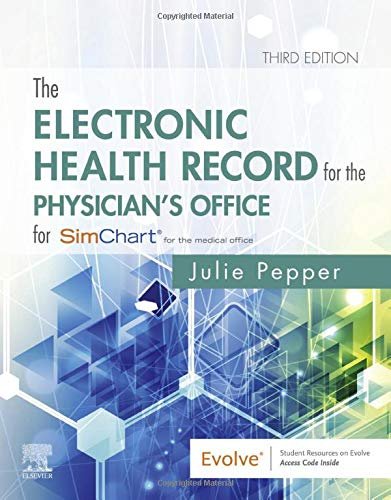

Review of The Electronic Health Record for the Physician’s Office: For SimChart for the Medical Office (3rd Edition)
As healthcare evolves rapidly with technological advancements, mastering Electronic Health Records (EHR) has emerged as a critical skill for medical office professionals. The Electronic Health Record for the Physician’s Office (3rd Edition), published by Elsevier, serves as a vital resource for students and aspiring medical office personnel who wish to gain hands-on experience and foundational knowledge in the EHR landscape. This review delves into the book’s features, strengths, and potential areas for improvement.
Content Overview
This edition emphasizes a comprehensive approach to EHR learning, integrating various essential aspects like administrative, clinical, billing, and coding skills. The book is fully integrated with SimChart for the Medical Office, an educational EHR platform (sold separately), which enhances its practical relevance. This pairing allows learners to navigate and utilize an actual EHR system, bridging the gap between theory and real-world practice.
The content is well-structured, beginning with the fundamentals—such as EHR implementation, troubleshooting, and compliance with HIPAA regulations—before advancing to more complex topics like telehealth, patient portals, and insurance reimbursement. This progression is effective for building a strong foundational knowledge base while also preparing students for the Certified Electronic Health Records Specialist (CEHRS) certification.
Learning Support Features
One of the significant strengths of this textbook is its robust array of learning support features. Each chapter includes:
- Chapter Review Activities: These promote knowledge retention and understanding by revisiting key points.
- Critical Thinking Exercises: These thought-provoking questions stimulate discussion and encourage deeper engagement with the material.
- Step-by-Step EHR Exercises: Integrated throughout each chapter, these exercises vary in difficulty, allowing users to build their skills progressively. This hands-on approach is invaluable for learners especially those who may not have prior exposure to EHR systems.
Additionally, the "Trends and Applications" boxes provide current industry insights, demonstrating the ongoing relevance of EHR in enhancing health care services.
Practical Application and Resources
An essential aspect for students is the practical application of their learning. The book excels by including application appendices with additional forms, allowing students to practice scenarios before tackling graded exercises within SimChart. This preparation is helpful as it builds confidence and proficiency in EHR tasks.
The availability of instructor online resources, including a test bank and teaching aids, further supports educators in delivering the content effectively. The presence of a custom test generator for students facilitates CEHRS exam preparation and simulation, enhancing the overall learning experience.
Updates and New Content
This third edition brings noteworthy updates, particularly in areas concerning telehealth, patient portals, and evolving insurance practices. In an era where telehealth has taken center stage due to recent global events, the inclusion of this content is both timely and essential. It reflects the rapid changes in healthcare delivery and ensures that learners are equipped with the latest knowledge and skills.
User Experience
From a user experience perspective, the book is well-organized and user-friendly. The layout and design facilitate easy navigation, allowing readers to locate relevant information quickly. Its concise length of 204 pages ensures that the material remains accessible without overwhelming students.
That said, while the primary focus on EHR is commendable, some readers might find the integration with SimChart challenging if they are not familiar with digital platforms or if the software requires additional training. Potential users should be prepared for a learning curve associated with acclimating to both the textbook and the software.
Conclusion
The Electronic Health Record for the Physician’s Office (3rd Edition) stands out as a comprehensive and essential resource for anyone aspiring to work in a medical office setting. With its blend of theoretical foundations, practical applications, and updated industry content, it effectively prepares students for a dynamic and increasingly digital healthcare environment.
While there could be a gentle learning curve for those less familiar with EHR systems, the book’s thorough approach and supportive resources make it a valuable investment for future medical office professionals. Whether you are a student aiming for certification or an educator looking for effective teaching aids, this textbook proves to be a worthwhile addition to your educational toolkit.
