
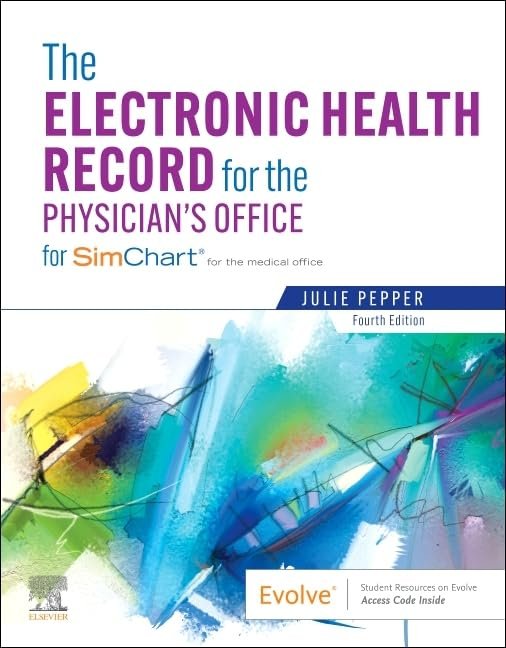

Review of The Electronic Health Record for the Physician’s Office: For SimChart for the Medical Office
In today’s rapidly evolving medical landscape, mastering Electronic Health Records (EHR) is essential for healthcare professionals. The Electronic Health Record for the Physician’s Office, 4th Edition, co-authored by renowned educator Julie Pepper, combines theoretical knowledge with practical application to prepare students and professionals for real-world challenges in medical office settings. This review will delve into the book’s features, usability, and overall effectiveness as a learning resource.
Content Overview
The textbook is structured cohesively, integrating a print format with the online SimChart for the Medical Office software, offering a balanced approach to learning. Each chapter is designed to provide clear, step-by-step instructions that lead the learner through various EHR tasks. One standout feature is its use of real-world examples and screenshots, which help bridge the gap between theory and practice. This visual aid is crucial in helping users become familiar with EHR systems, making the learning process more intuitive.
Hands-on Practice with SimChart
The integration of SimChart offers an unprecedented opportunity for hands-on practice. The book outlines numerous EHR exercises that gradually increase in complexity, reinforcing essential concepts and skills required for effective medical office management. This replication of real-world scenarios enhances learning retention and prepares users for the Certified Electronic Health Records Specialist (CEHRS) examination.
Structured Learning Approaches
Julie Pepper has structured the content systematically, ensuring that readers can build upon their knowledge incrementally:
-
EHR Exercises: These are well-designed to guide users through administrative, clinical, and coding tasks. This diversity in practical exercises allows learners to gain comprehensive insights into the EHR’s applications.
-
Critical Thinking Exercises: Each chapter features thought-provoking questions, promoting problem-solving skills. This element encourages learners to think beyond procedural tasks and consider the implications of their decisions within patient care and office management.
-
Chapter Review Activities: With key terms, matching, and true/false questions, these activities solidify understanding and provide opportunities for self-assessment. They serve as an excellent tool for students preparing for exams or seeking to evaluate their comprehension of the material.
- Real-life Trends and Applications: Each section integrates contemporary trends, such as data validation and patient portals, ensuring that learners understand not only how to use EHR but also why these systems are integral to modern healthcare.
Comprehensive Resource for Certification
The book’s alignment with the latest Certified Electronic Health Records Specialist (CEHRS) examination blueprint is a significant selling point. It prepares users for the specifics required by certification bodies, making it an invaluable resource for medical assisting students and professionals. Notably, updated topics like IT troubleshooting techniques and federal guidelines reflect current realities in healthcare documentation and reimbursement.
Coverage of Traditional Procedures
An interesting addition is the discussion of paper-based office procedures. While the focus is rightly on electronic systems, acknowledging traditional methods provides a complete picture of the transformation occurring in medical offices. This comprehensive view can enhance learners’ understanding of the evolution of health record management and ensure they appreciate the contrasts between paper and electronic systems.
Usability and Design
In terms of design, the book is user-friendly and effectively organized, making navigation straightforward. The combination of print and software engages different learning styles and keeps users motivated. This adaptability is particularly beneficial in a field that demands technological proficiency and adaptability.
However, while the book’s integration with SimChart is a significant advantage, it is important to note that users must purchase SimChart separately. This additional cost may be a deterrent for some, though the investment is justified given the quality of the practical training it provides.
Conclusion
In conclusion, The Electronic Health Record for the Physician’s Office, 4th Edition is an exemplary resource for anyone looking to acquire or bolster their skills in EHR management. Its comprehensive approach, combining theory with practical application, provides an effective learning experience for medical assisting students and professionals alike. The book excels in preparing users for certification and equips them with crucial skills for real-world application in healthcare settings.
While the requirement to purchase SimChart separately may pose a minor hurdle, the benefits of realistic, hands-on practice cannot be overstated. Overall, this text is a worthwhile investment for anyone serious about succeeding in the field of electronic health records and medical office management.
